The One Piece TCG is Bandai’s trading card game built on Eiichiro Oda’s manga, and it’s one of the easiest card games to learn once a few key ideas click. This beginner’s guide explains how a game works, what the set codes mean, which products to buy first, how English and Japanese releases differ, and where to play in the UK.
We handle English, Japanese and Korean One Piece product every day, and these are the questions new players ask us most. By the end you’ll know exactly what to put in your basket for a first deck or a first box.
What Is the One Piece TCG?
The One Piece Card Game is a two-player trading card game published by Bandai. Its first booster set, OP-01 Romance Dawn, launched in Japan on 22 July 2022, and the English edition of Romance Dawn followed on 2 December 2022. Since then the game has grown into a regular stream of main sets, extra boosters, premium boosters and starter decks.
In the One Piece TCG, each player leads a pirate crew. You pick a Leader card, such as Monkey D. Luffy, Roronoa Zoro or Shanks, then build a deck of Characters, Events and Stages from the same colour. The goal is to break through your opponent’s Life cards and land one final hit on their Leader.
Fans of the anime will recognise every face, but you don’t need to know the story to enjoy the One Piece TCG. The rules are fair to newcomers, games are quick, and a ready-made starter deck is enough to start.
How the One Piece Card Game Works
Bandai’s official play guide covers the basics clearly. Here’s the short version, in the order you’ll meet each idea at the table.
Your Leader and Your 50-Card Deck
Every One Piece TCG deck has exactly one Leader card and a main deck of 50 cards. Your main deck must match your Leader’s colour, and you can include up to four copies of any one card number. Some Leaders have two colours, which lets you mix cards from both.
The Leader sits on the field from the start of the game. It can attack, it often has a powerful effect, and its Life value tells you how many Life cards you begin with.
DON!! Cards: Your Resource
Alongside the main deck you have a separate DON!! deck of exactly 10 DON!! cards. These are your resource. You spend DON!! to play Characters, Events and Stages, and you can give DON!! to your Leader or Characters to boost their power for an attack.
Each turn you add two DON!! cards to your cost area, up to the full 10. The player who goes first only adds one on their first turn and skips their first draw, which helps balance the start. Bandai’s comprehensive rules also say that neither player can battle on their first turn, so the opening turns are about setting up your board.
Life Cards and How to Win
At the start of the game you place Life cards face down from the top of your deck, as many as your Leader’s Life value. When your Leader takes damage, you take a Life card into your hand. Some cards have a Trigger: when one of those comes out of your Life, you may reveal it and activate its effect instead of adding it to your hand.
You win by landing a successful attack on your opponent’s Leader when they have no Life cards left. You can also win if your opponent runs out of cards in their deck.
Card Types and Colours
The game has five card types: Leader, Character, Event, Stage and DON!!. Characters fight for you, Events give a one-off effect, and a Stage gives an ongoing effect, though you can only have one Stage on the field at a time.
There are six colours: Red, Green, Blue, Purple, Black and Yellow, and each colour plays in its own way. Many cards also carry a Counter value on their left edge. When you’re attacked, you can trash Character cards with a Counter value from your hand to boost your defending card’s power, or use Event cards with a Counter effect, and Blocker characters can step in to take a hit.
A Turn, Step by Step
Every turn runs through five phases in the same order:
- Refresh: set your rested cards active and return any DON!! you gave out.
- Draw: draw one card.
- DON!!: add two DON!! cards to your cost area.
- Main: play cards, give DON!!, use effects and attack.
- End: finish your turn.
That rhythm makes the One Piece TCG quick to pick up. After two or three games, most new players stop checking the rules and start thinking about strategy.
Words You’ll See on the Cards
The text on One Piece cards uses a handful of terms again and again. Learn these and most effects become easy to read:
- Active and rested: an active card is upright and ready; a rested card is turned sideways after it attacks or is used.
- Rush: a Character with Rush can attack on the turn it’s played.
- Blocker: lets a Character become the target of an attack instead of the card your opponent chose.
- Counter: the value printed on a card’s left edge, added to a defending card’s power for that battle when you trash the card from your hand.
- Trigger: an effect you may activate, instead of adding the card to your hand, when it comes out of your Life after damage.
- On Play: an effect that happens as soon as the card is played.
If a card says something you don’t understand, the official rule manual and card Q&A documents on Bandai’s site explain each wording in detail.
Set Codes: OP, EB, PRB and ST Explained
Every One Piece Card Game product carries a short code, and once you can read it you’ll always know what you’re buying. This table covers the four you’ll see most often.
| Code | What it is | Example |
|---|---|---|
| OP | Main booster sets, the heart of each new release | OP-01 Romance Dawn, OP-16 The Time of Battle |
| EB | Extra Boosters, smaller themed sets | EB-01 Memorial Collection, EB-05 Heroines Edition vol.2 |
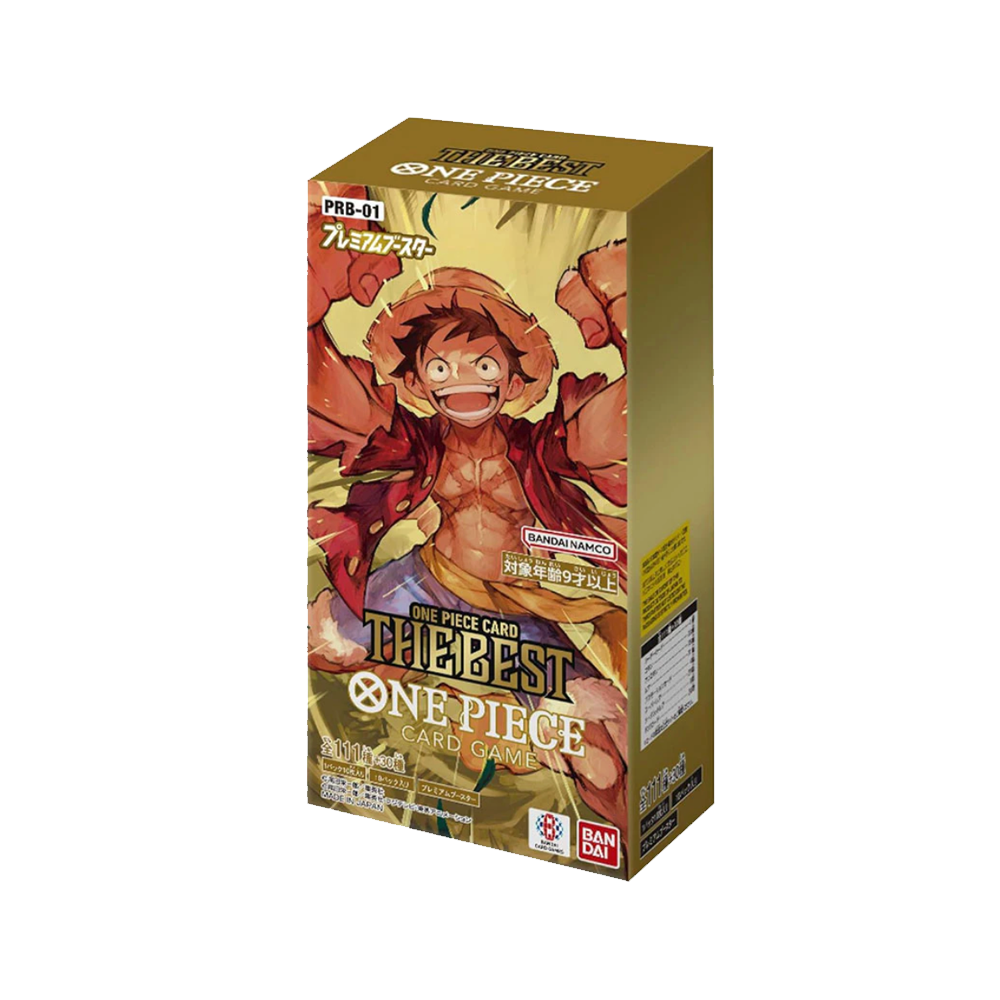
| PRB | Premium Boosters, built around popular cards from the past with new art | PRB-01 One Piece Card The Best |
| ST | Starter Decks, ready to play straight from the box | ST-31 Red Monkey.D.Luffy |
Main OP sets are the biggest releases. Bandai’s official page for OP-18 The Dominance of God, for example, lists 127+1 card types, while the EB-05 page lists 75+2, which shows how much smaller an extra booster is.
Premium Boosters are a different idea again. Bandai describes PRB-01 as “featuring a selection of the most popular cards from the past”, and many of its cards are reprints with new illustrations. That makes a premium booster a favourite with collectors who missed the early sets.
What to Buy First as a New One Piece TCG Player
There’s no single right first purchase. It depends on whether you want to play straight away, open packs, or start a collection of One Piece cards.
Starter Decks
A Starter Deck is the simplest way into the game. Bandai’s page for ST-31 Red Monkey.D.Luffy lists a 51-card constructed deck (your Leader plus 50 cards), 10 DON!! cards and a playsheet, plus one OP-16 booster pack, and describes it as “everything you need to start playing”. Six new Starter Decks, ST-31 to ST-36, launched in English on 31 July 2026, including Green Roronoa Zoro and Blue Kuzan.
Two friends with a Starter Deck each can play a full game of the One Piece Card Game the same evening.
Booster Boxes
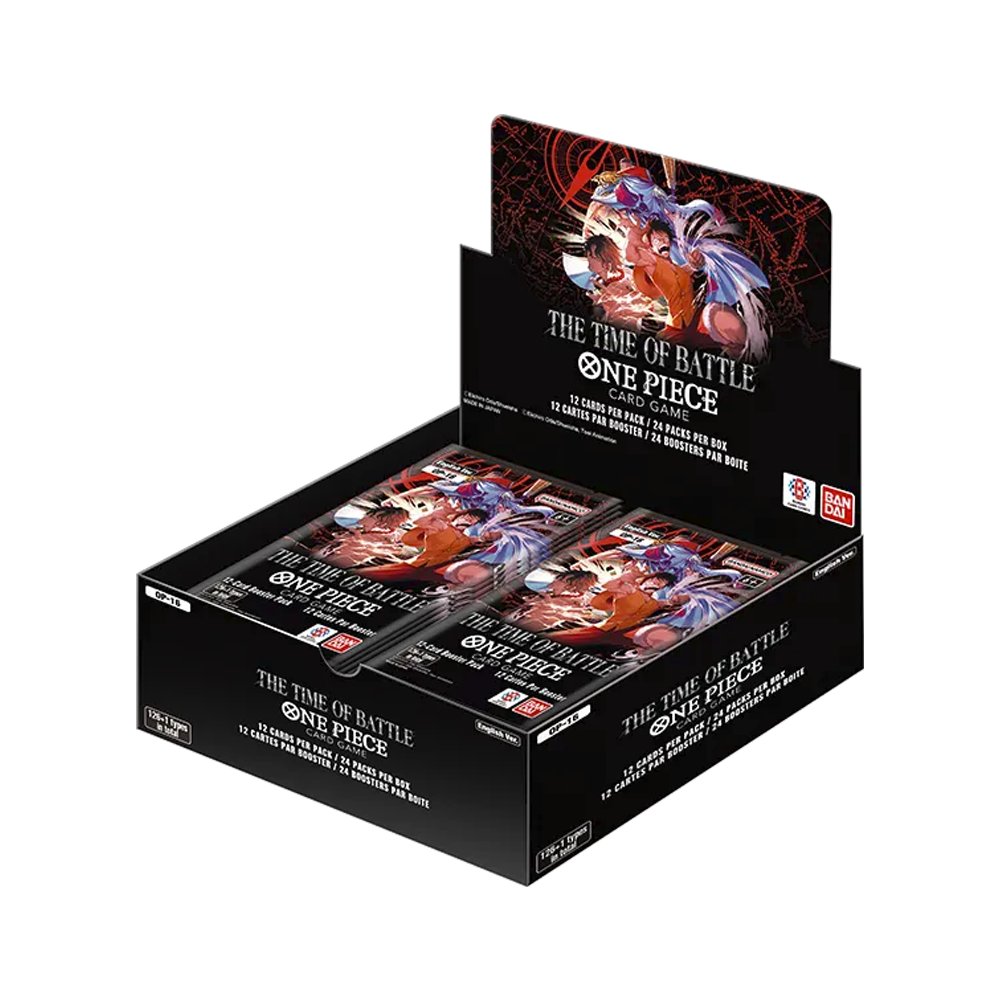
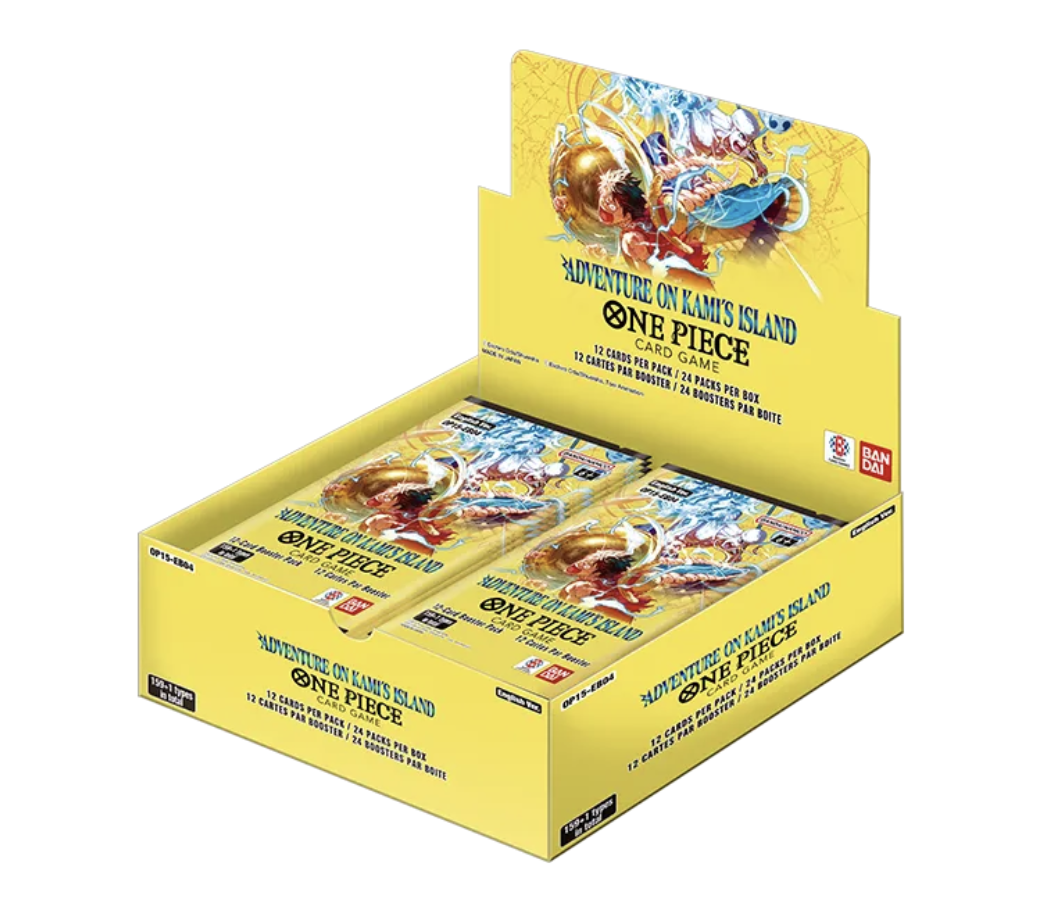
Once you have a deck, booster packs let you improve it and build a collection. An English One Piece TCG booster box holds 24 packs of 12 cards. A Japanese box also holds 24 packs, but each Japanese pack contains six cards.
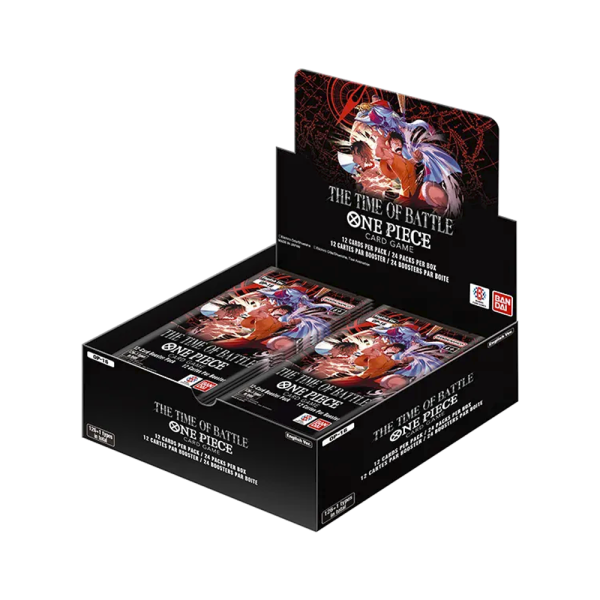
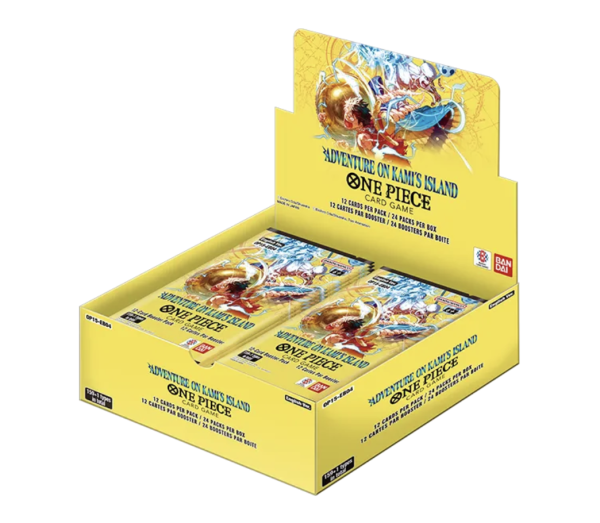
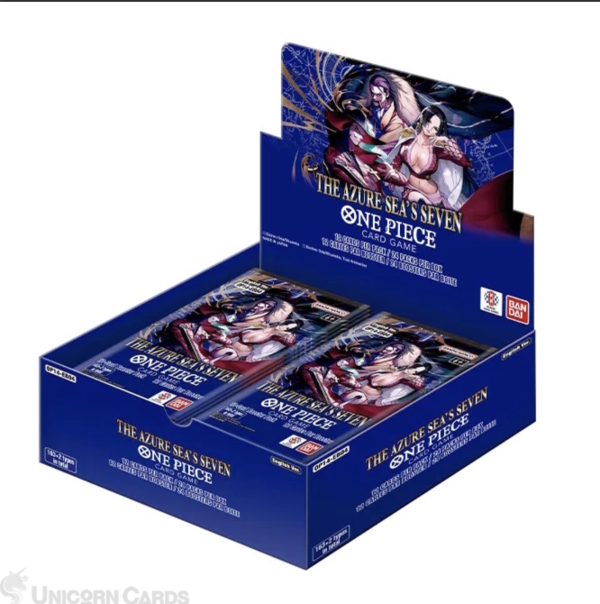
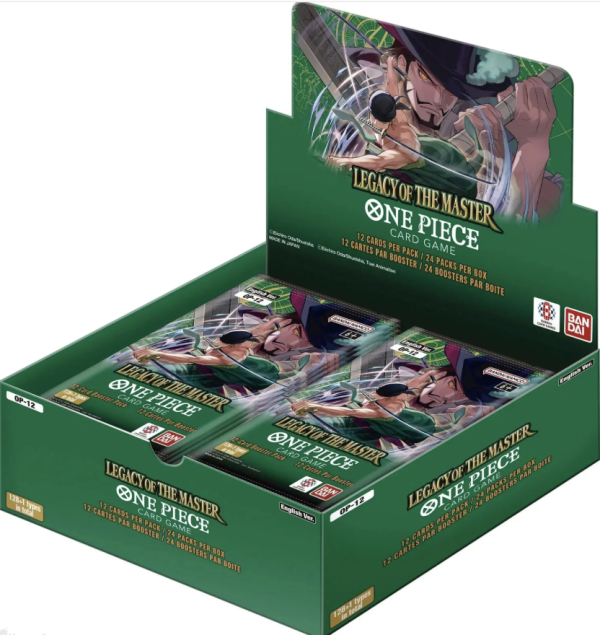
Our English range includes the English One Piece OP-16 booster box, the English One Piece OP-15 booster box, the English OP-14 One Piece booster box and the OP-12 Legacy of the Master booster box. A recent set is the best choice for players, because its cards will be the ones you see at events.
Special Sets and Accessories
You’ll need sleeves and somewhere to keep your deck. The One Piece Card Game: Special Goods Set – Former Four Emperors is a neat example of a set built for players: Bandai lists a playmat, a storage box and a silver foil card inside.
Building Your First One Piece TCG Deck
After a few games with a Starter Deck, most players want to make it their own. The good news is that you don’t need to start from scratch. Keep the Leader you enjoy, then swap cards in and out as you open packs or trade with friends.
A few simple principles help:
- Stay in your Leader’s colour. Cards that don’t match can’t go in the deck, so check colours before you trade.
- Keep a spread of costs. You gain DON!! steadily, so you want cheap cards for early turns and bigger cards for later ones.
- Count your Counter cards. Defence wins games, and cards with a Counter value protect your Leader without costing DON!!.
- Use the four-copy rule wisely. Four copies of your best card make it more likely to turn up, but too many expensive cards can leave you stuck.
Change a few cards at a time, then play again. That’s how most One Piece TCG players refine a deck. Small changes make it easy to see what’s working. Over time you’ll learn which One Piece cards suit your style, and that’s when deck building becomes one of the most enjoyable parts of the game.
If you’d like to explore a different Leader, a booster box from the set that introduced it is a good next step. You’ll open plenty of cards in that Leader’s colour, and the duplicates make great trading material at your local store.
Common Beginner Mistakes
Everyone makes the same few errors in their first games of the One Piece Card Game. Knowing them in advance saves a lot of frustration.
- Spending every DON!! on Characters. Giving DON!! to an attacker can be just as strong, especially near the end of a game.
- Defending every attack. Taking damage early puts cards in your hand, so save your Counter cards for the hits that really matter.
- Ignoring your opponent’s Life. Count how many Life cards they have left and plan your final turn around it.
- Forgetting Trigger effects. When a Life card comes to your hand, check whether it has a Trigger before you add it.
None of these matter much in friendly games, and that’s the point of playing casually first. Mistakes are how you learn.
English or Japanese One Piece Cards?
This is the question we’re asked most about One Piece trading cards, and both choices are good. The One Piece Card Game is made in Japan, so Japanese sets have always arrived first. In 2026 the gap has narrowed sharply: OP-16 The Time of Battle reached Japan on 30 May and English shelves on 12 June, and the English OP-17 arrived just six days after the Japanese one.
- Choose English if you want to read every card, play at UK events or trade with local players.
- Choose Japanese if you love Japanese prints, want quick six-card packs, or want sets from the very start of the game, such as a Japanese OP-01 booster box.
- Choose Korean if you’d like to open the game in another language. Our Korean boxes carry OPK codes, such as OPK-02.
Card numbers, colours, costs and artwork make foreign-language One Piece cards easy to identify, and the Japanese official site is useful for checking Japanese card lists. If you plan to play competitively, Bandai publishes a separate rule on using cards in different languages, so check the current version on the official rules page before you bring Japanese cards to a tournament.
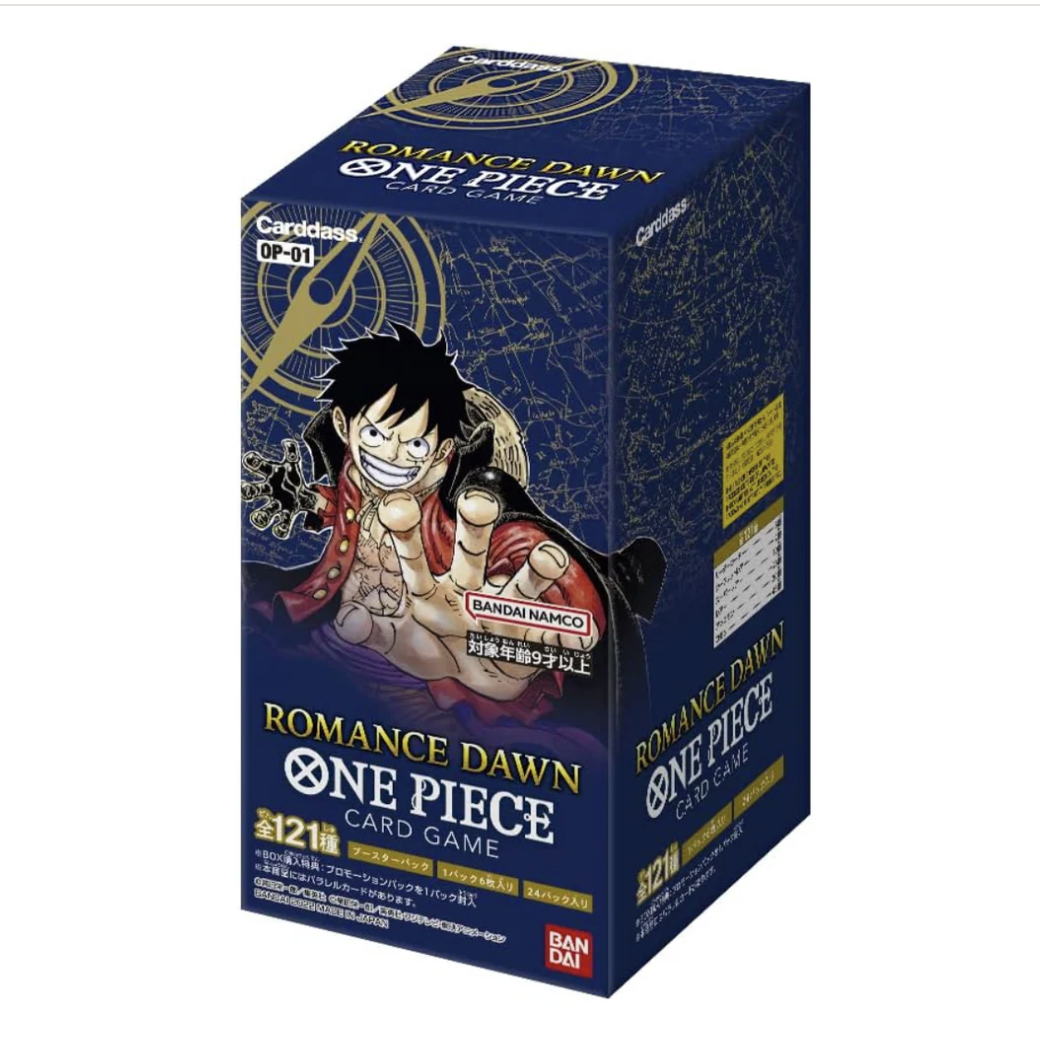
Browse the full ranges in our English One Piece, Japanese One Piece and Korean One Piece categories.
Collecting One Piece Trading Cards
Plenty of people collect One Piece trading cards without ever playing a game, and the hobby suits both. Rarities run from Common, Uncommon and Rare up to Super Rare and Secret Rare, with Leader cards, special cards and DON!! cards alongside them. Many sets also include alternate art versions of popular cards.
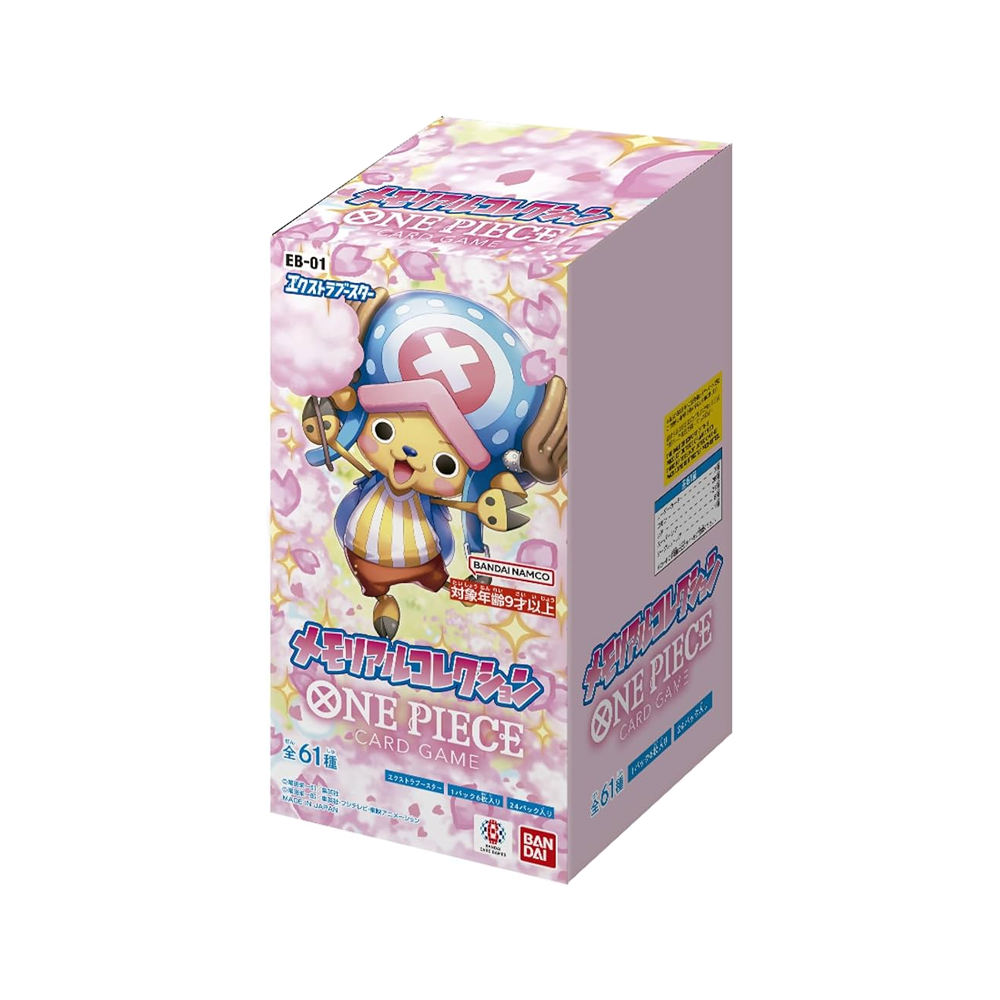
Recent sets have added more collector treatments. Bandai’s OP-16 The Time of Battle page says the set’s Super Alt-Art cards feature the “Three Admirals”, Sakazuki, Kuzan and Borsalino, and collectors usually call these manga rares. Extra boosters such as a Japanese EB-01 booster box are popular with collectors for their themed card lists.
A few good habits keep a collection of One Piece cards in great condition:
- Sleeve your best pulls as soon as they leave the pack.
- Use top loaders or semi-rigid holders for anything you want to keep flat.
- Store sealed boxes flat, somewhere cool and dry, away from direct sunlight.
- Keep a simple list of what you own by card number, such as OP01-001.
Collecting is personal. Some people chase every Leader, some chase one character across every set, and some just keep the art they love. All of it counts.
Where to Play the One Piece TCG in the UK
The easiest place to start is your local game store. Bandai runs store events throughout the year, and its official site says players can search for a participating store on BANDAI TCG+.
Pirates Party is a good first event. Bandai describes it as “even more casual than current Store Tournament events”, and Vol. 3 runs from 1 September to 31 October 2026 at participating stores, with promo cards for players who take part.
For bigger events, the official site lists BANDAI CARD GAMES Fest 26-27 in London at ExCeL London from 15 to 17 January 2027. The One Piece schedule there includes the Championship 26-27 Europe Finals Season 2 and a Last Chance Qualifier, with side events still to be announced.
You don’t need to travel to enjoy the game, of course. Kitchen-table games with friends are how most players learn, and they’re where the One Piece TCG is at its most relaxed.
10 Best Tips for New One Piece TCG Players
These are the tips we’d give any friend opening their first One Piece TCG deck:
- Start with a Starter Deck. Learn one deck well before you build your own.
- Read your Leader card twice. Its effect shapes the whole game plan.
- Count your DON!! each turn, and plan how to use all of it.
- Don’t rush your Life. Taking damage gives you cards, so choose when to defend.
- Keep Counter cards in hand for the attacks that matter most.
- Pick one colour first. Two-colour Leaders are fun, but one colour is easier to learn.
- Play little and often. Five short games teach more than one long one.
- Join a casual store event such as Pirates Party before trying a tournament.
- Sleeve your deck from day one to protect your One Piece cards.
- Buy the current set if you want to play, and older sets if you want to collect.
What’s Coming Next
The One Piece Card Game release calendar moves quickly. OP-17 The World’s Strongest Warriors is already out in English, and Bandai’s English site lists EB-05 Heroines Edition vol.2 for 30 October 2026 and OP-18 The Dominance of God for 20 November 2026. Bandai says OP-18 “features Water Seven and the Holy Knights of God”.
Release dates can change, so check the official site before you plan around one. We list new One Piece trading cards as pre-orders where we can, and the product name will always tell you if something hasn’t released yet.
If you’re curious about other games, our MTG guide and Riftbound booster box guide cover two more games that new players often ask about.
One Piece TCG FAQs
Is the One Piece TCG good for beginners?
Yes. Each player builds around one Leader, the DON!! system is simple, and a Starter Deck has everything needed for a first game.
How many cards are in a One Piece Card Game deck?
One Leader card, a main deck of exactly 50 cards and a separate DON!! deck of 10 cards. You can include up to four copies of any card number.
How many packs are in a One Piece booster box?
Both English and Japanese boxes hold 24 packs. English packs contain 12 cards and Japanese packs contain 6 cards.
Can I play Japanese cards at English events?
Bandai publishes a separate rule on using cards in different languages. Check the current version on the official rules page before a tournament.
Which One Piece set should I start with?
For playing, start with a current Starter Deck and the newest main set. For collecting, choose the set or character you love most.
Where to Buy One Piece Cards
Ready to start? Browse our English One Piece range for the latest boxes, explore Japanese One Piece for the back catalogue, including the Japanese PRB-01 booster box, or visit our TCG blog for more guides. If you have a question about any product, email sales@obsidiatcg.co.uk and we’ll be happy to help.